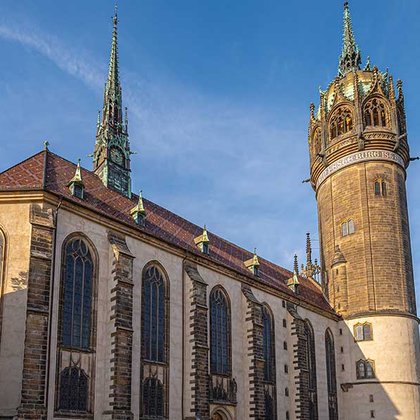


History of the town church
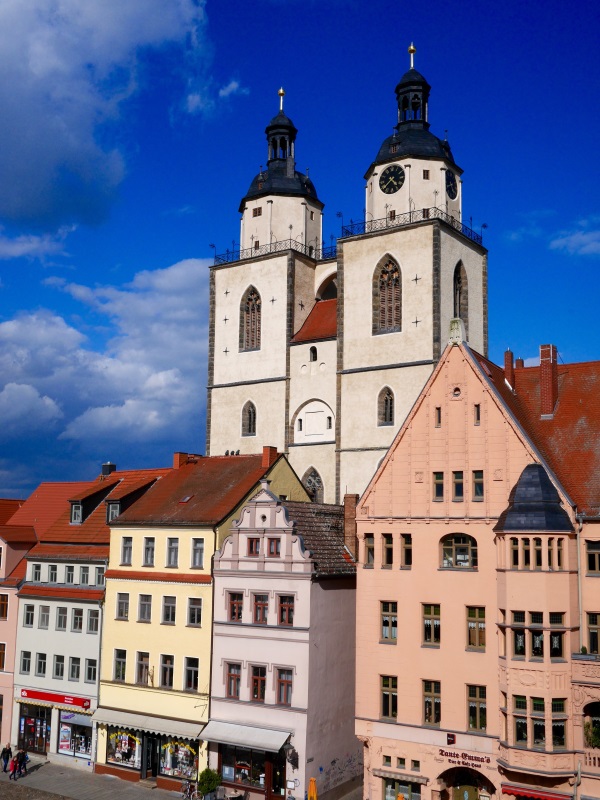
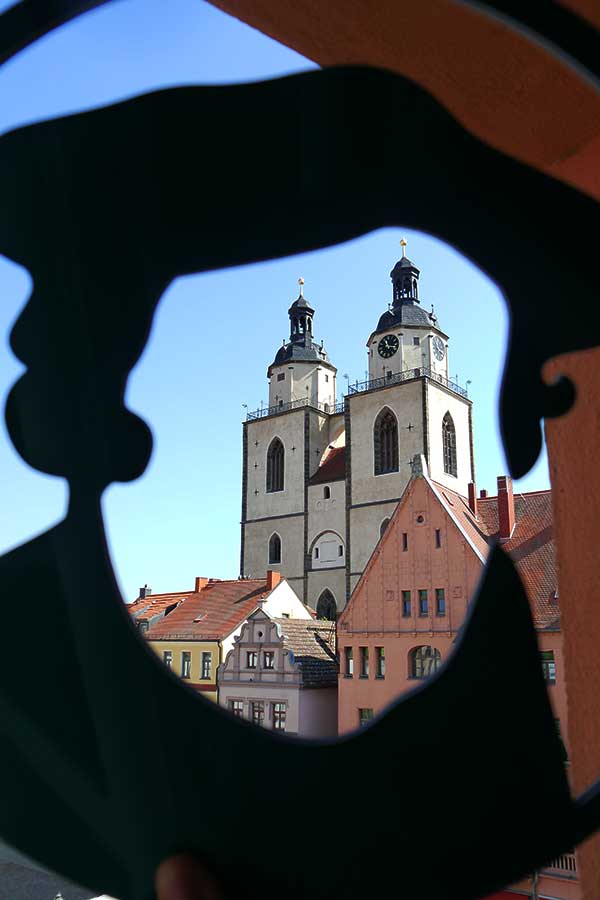
The town church of St. Mary was built between 1281 and 1283, making it the oldest building in the town, but it was Martin Luther and Johannes Bugenhagen, who both preached in the church during the Reformation, that made the church most famous. Today you can see Martin Luther's original pulpit on loan in the Luther House. Experience a touch of history within the historic walls of the town church, which in 1521 was the setting for the first Holy Mass to be held in German and the first communion with bread and wine. A short time later, in 1525, the church was also the venue for the wedding of Martin Luther and Katharina von Bora, which is still celebrated every year with a large town festival .


Current special exhibition
Experience 500 years of Reformation history up close: to mark the 30th anniversary of the inclusion of St Mary’s Church in Wittenberg on the UNESCO World Heritage List, a special exhibition invites visitors to discover unique original artefacts from the Reformation period. The exhibition brings the history of this significant UNESCO World Heritage Site to life in a striking way and offers fascinating insights into church life from the Reformation era to the present day.
Among the outstanding exhibits are Katharina von Bora’s wedding ring, a Luther Bible from 1534, and a medieval communion chalice from which Martin Luther is believed to have received Holy Communion. These extraordinary artefacts are complemented by historical everyday objects and valuable archival documents that bear witness to the city church’s close connection with the Reformation.
St Mary’s City Church is the church where Martin Luther preached and, together with the Luther House and the Castle Church, forms part of the UNESCO World Heritage Site ‘Luther Memorials in Eisleben and Wittenberg’. The special exhibition impressively demonstrates that the church is not merely a historical memorial site, but remains a living place of faith to this day. Many of the objects on display are still used in the church’s daily life, thus bridging the gap between past and present.
Visitors to Lutherstadt Wittenberg will have the rare opportunity, thanks to this exhibition, to experience authentic artefacts from the Reformation at close quarters and to rediscover the history of one of the most significant sites of the Reformation.
Highlights of the special exhibition:
- Katharina von Bora’s wedding ring
- The Luther Bible from 1534
- A medieval communion chalice associated with Martin Luther
- Historical archive documents and everyday objects spanning over 500 years of church history
- Insights into the history and present day of the UNESCO World Heritage Site, Wittenberg Town Church
The special exhibition is a unique experience for culture lovers, history enthusiasts, pilgrims and anyone wishing to discover the origins of the Reformation at the authentic site. It complements a visit to Wittenberg’s UNESCO World Heritage Sites by offering a unique perspective on the history of the Reformation and its tradition, which remains alive to this day.
Further information on the UNESCO anniversary can be found here.
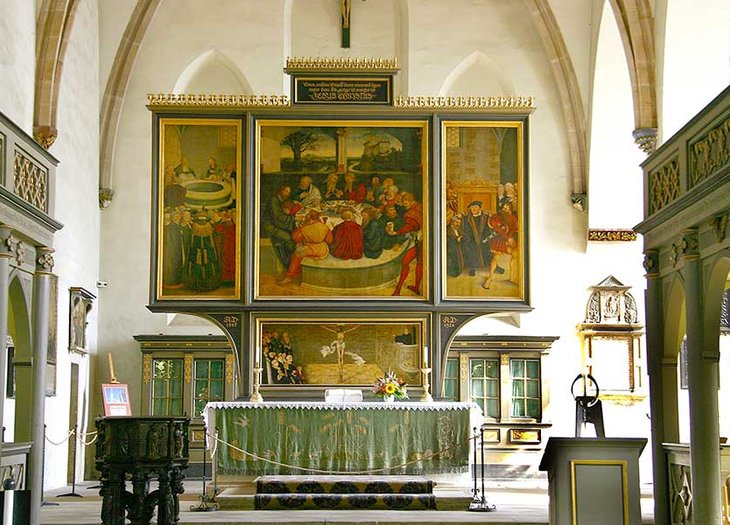
The nave
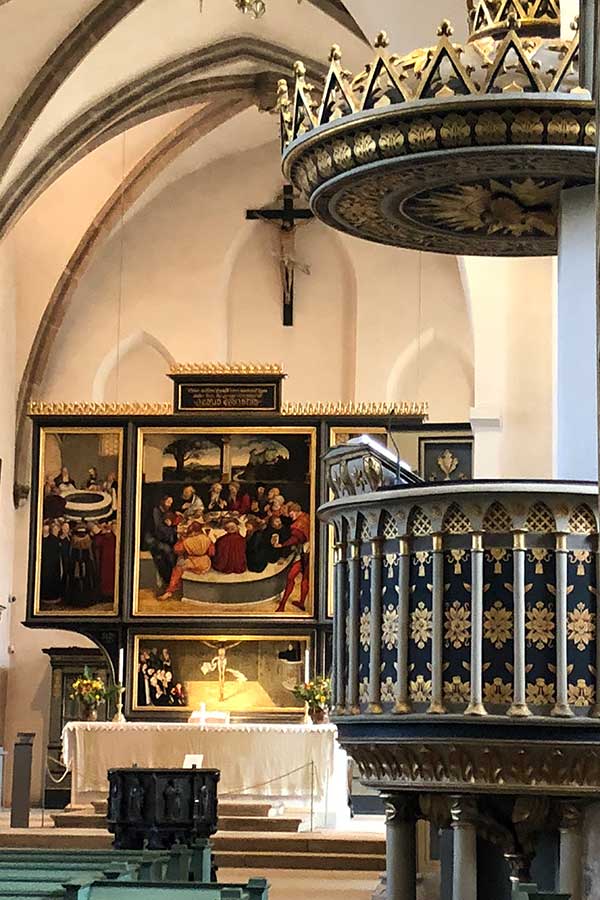
Let yourself be captivated by the historic walls of Wittenberg's town church. Inside the church you will find, among other things, the impressive Reformation altar by Lucas Cranach the Elder and Lucas Cranach the Younger. On the front you will find a detailed painting of the Last Supper with Martin Luther as one of the disciples. Philipp Melanchthon and Johannes Bugenhagen have also been immortalized on the altar. You will also find an elaborately decorated baptismal font by Hermann Vischer, the oldest exhibit in the church.
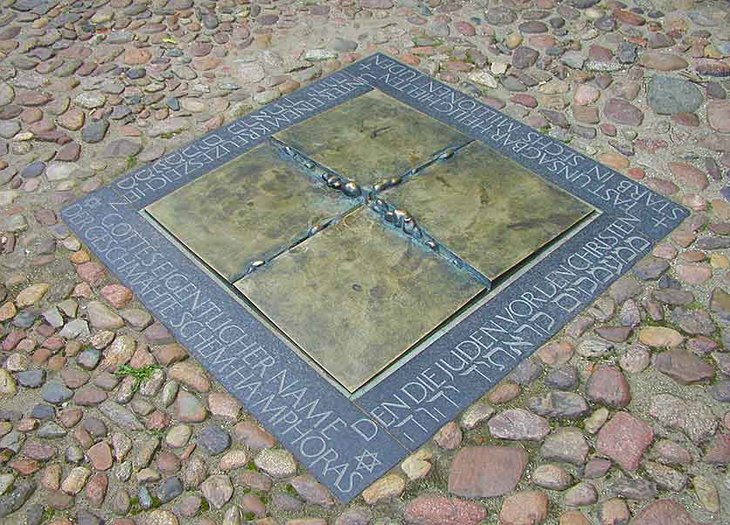
Memorial "The Jewish sow"
On the south-eastern outer wall of the church is a completely different piece of history. The pictorial representation of the Jewish sow, which was common in the High Middle Ages, is today intended as a memorial against anti-Semitism. At the time of its creation, such "paintings" often adorned churches and were intended to mock Jews. In 1988, the parish installed a memorial plaque beneath the "Judensau" to commemorate the historical consequences of Jew-hatred.
Wittenberger Kanzelreden
Die Wittenberger Kanzelreden schließen an die Tradition der Stadtkirche an, ein besonderer Predigtort zu sein. Seit vielen Jahren werden namhafte Persönlichkeiten aus Kirche und Gesellschaft, aus Kunst und Kultur, aus Wissenschaft und Politik eingeladen, um Worte ins Spiel zu bringen und Gedanken zu äußern, die anstoßen, querdenken, verändern. Die Kanzelreden in Martin Luthers Predigtkirche wollen anregen und aufregen. Im Anschluss an die Kanzelreden in der Stadtkirche bietet sich die Gelegenheit, mit der jeweiligen Kanzelrednerin bzw. mit dem jeweiligen Kanzelredner ins Gespräch zu kommen. In ungezwungener Atmosphäre können Fragen und Gedankenanstöße aufgegriffen und angesprochen werden.
Der Eintritt ist frei.

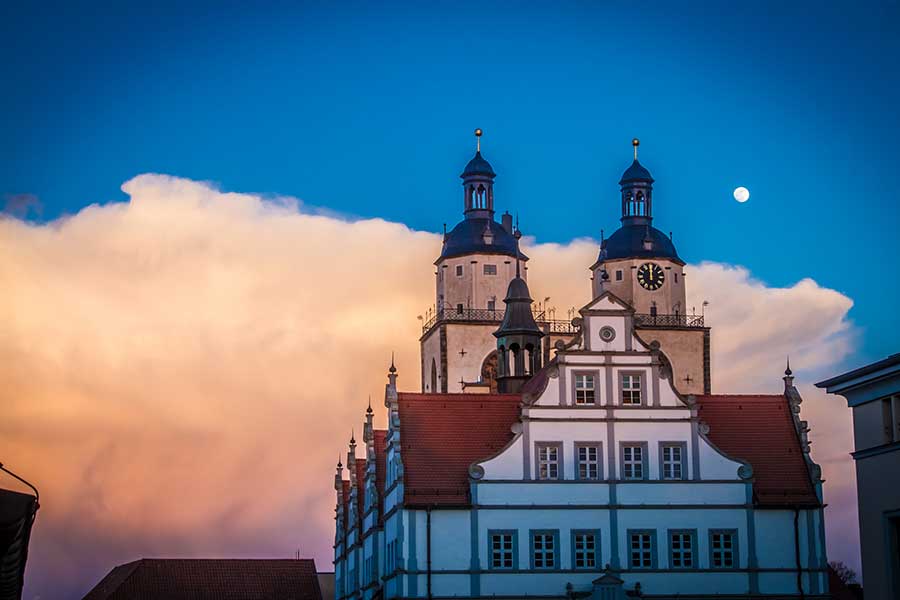


Karte öffnen
Wir möchten Sie darauf hinweisen, dass bei der Aktivierung der Karte Daten an den Anbieter Google übermittelt werden.

January / February
Monday - Thursday: Closed
Friday: 11.00 - 16.00
Saturday: 11.00 - 16.00
Sunday: 12.30 - 16.00
March
Monday - Saturday: 11.00 - 16.00
Sunday: 12.30 - 16.00
April - October
Monday - Saturday: 11.00 - 17.00
Sunday: 12.30 - 17.00
November - December
Monday - Saturday: 12.00 - 16.00
Sunday: 12.30 - 16.00